Rechargeable Battery
A lithium pack inside the tube, typically recharged once or twice a year depending on use. No wiring, which makes it the standard retrofit choice for a finished room.
Scheduled, app-controlled, and voice-operated window treatments — with no cords anywhere in the room.
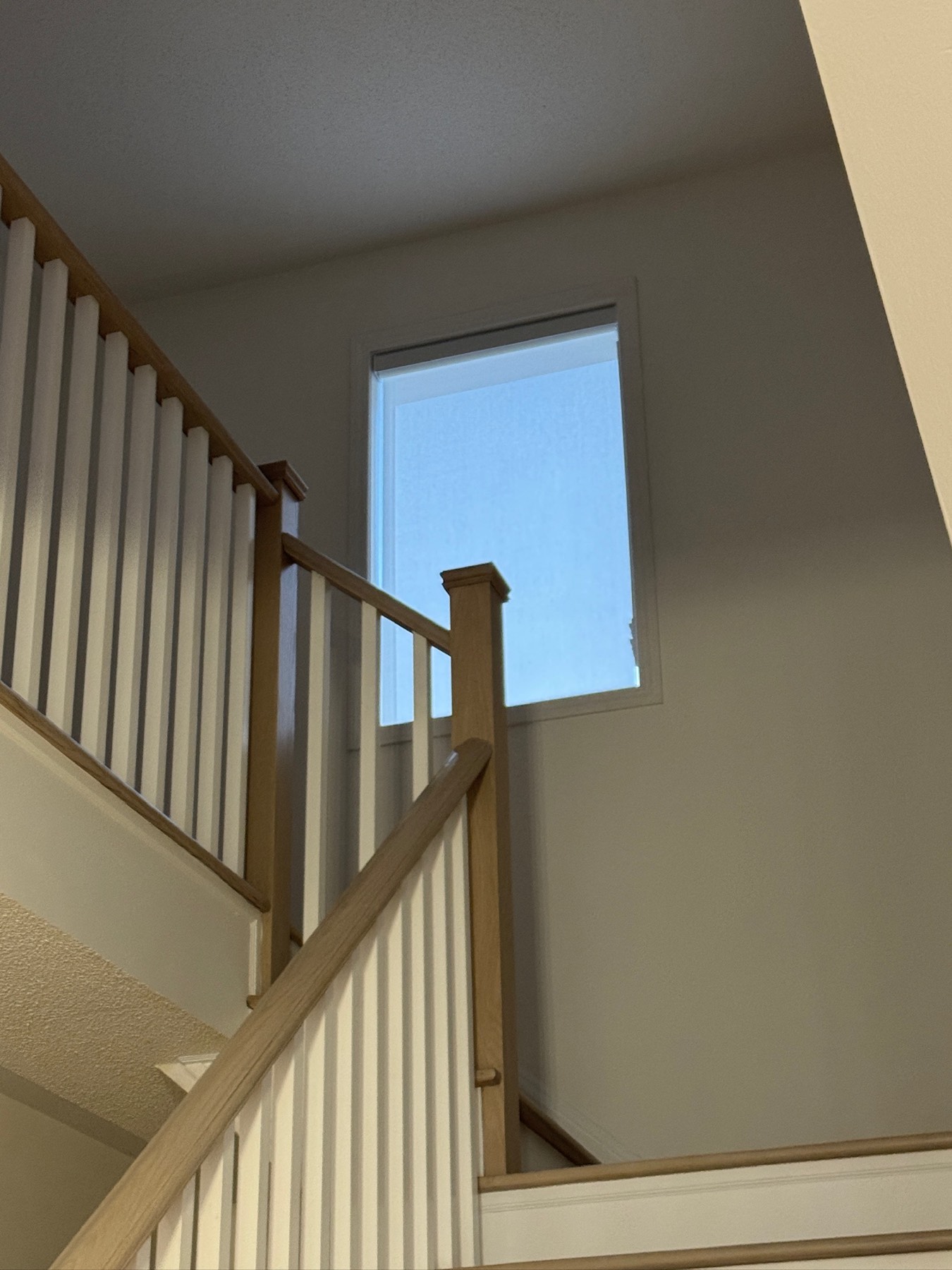
Motorization stopped being a luxury add-on somewhere around the point that batteries got good enough to last a year. Today it is the default answer for three specific situations: windows you physically cannot reach, banks of windows where operating each one by hand is tedious, and homes with young children, where a looped cord is a hazard you can simply design out.
The part people underestimate is scheduling. A shade that lowers itself on a west-facing window at 3pm in July keeps the room usable and takes load off the air conditioning, and it does it whether or not anyone is home to think about it.
Five shades across a curved bay window, moving together on a single command.
A Shadesmen install: five motorised roller shades on a bay window, operated as one group. Turn the sound on to hear how quiet the motors are in a normal room.
The right choice depends mostly on whether you are retrofitting an existing room or building.
A lithium pack inside the tube, typically recharged once or twice a year depending on use. No wiring, which makes it the standard retrofit choice for a finished room.
Wired to mains via a low-voltage transformer. Nothing to recharge, and the right answer during a renovation or new build when the walls are already open.
A small panel on the glass that tops up the battery from daylight. Effective on bright windows and genuinely useful on high or awkward ones you would rather never touch.
Handheld remotes and wall-mounted keypads, grouped by room or by window. The simplest option, and the one that needs no network at all.
Control from your phone, plus schedules based on clock time or sunrise and sunset. This is where most of the day-to-day value actually comes from.
Works with Google Home, Amazon Alexa, and Apple HomeKit for voice control and inclusion in wider scenes and automations.
For a typical household raising and lowering a shade once or twice a day, expect many months between charges rather than weeks. Heavier use, very large shades, and frequent scheduled movements all shorten that. Adding a solar charger on a bright window effectively removes the question.
Yes. The systems we install integrate with Google Home, Amazon Alexa, and Apple HomeKit, which gives you voice control and lets the shades take part in wider automations and scenes alongside your lighting and thermostat.
Sometimes. It depends on the tube diameter, the weight of the treatment, and how the existing system was built. We will look at what you have and tell you honestly whether a retrofit will work properly or whether replacing the unit is the better spend.
Battery and solar-charged shades keep working normally, since they do not depend on mains power. Hardwired shades stop until power returns, though most can still be operated manually. If outages are a concern where you live, that is worth factoring into the power choice.
Modern motors are quiet enough that the movement is unobtrusive in a normal room, though not silent. If the shade is going in a bedroom and will run on a morning schedule, tell us and we will specify a quieter motor.
Free in-home consultation. No pressure, no obligation. Just expert advice and a quote you can trust.